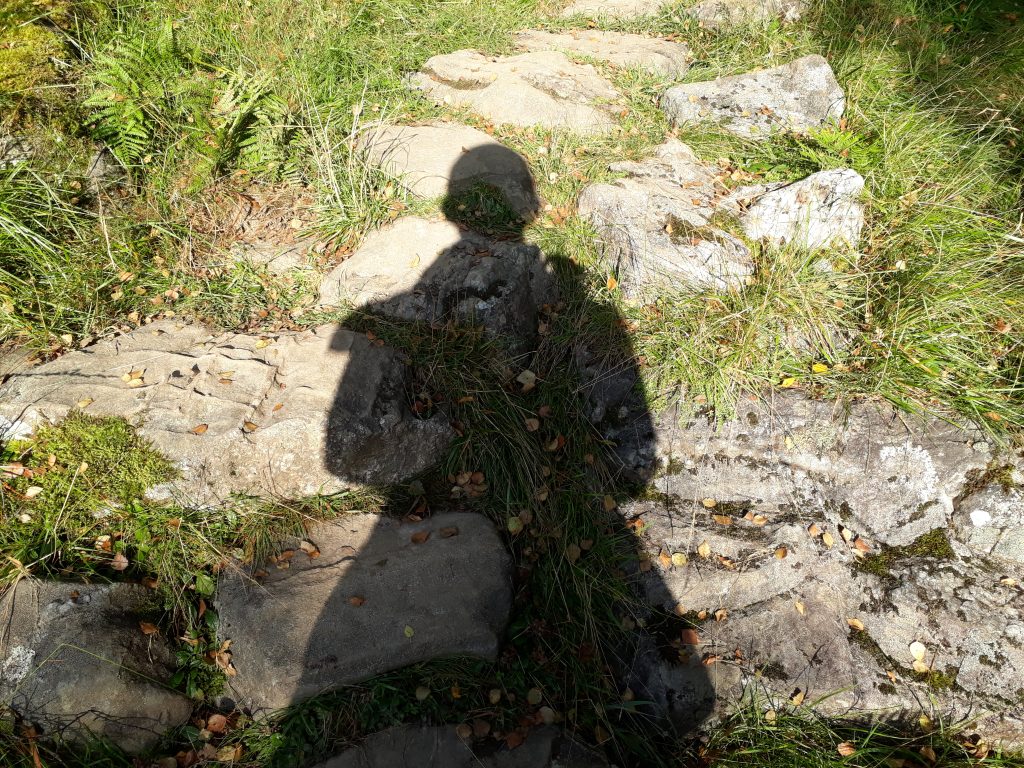
Recently, a friend wrote ‘I’m not myself at the moment’. It caught my attention because it’s a phrase I used often earlier this year. Lately, I’m saying ‘I feel more like myself again’. What on earth does this mean?!
I know, intellectually, that ‘self’ is ever-changing. Cells are replaced every few days, nails and hair grow, and tastes, opinions and moods change. I also know that my sense of self is enmeshed with those around me, my history and the stories I tell myself about who I am. These things change too. And yet … I do have a sense of ‘Amanda’ and, when I lose contact with this, I feel adrift.
There is, however, another aspect to being human – I glimpse it in meditation practice and experience it viscerally in Leadership Embodiment (LE) activities, especially in the feedback loop of working with a partner. It’s a state of being in which I’m fully alive and present, and everything seems possible and effortless. We might call it ‘centre’, presence or being ‘in flow’. What I find most interesting about it is that any sense of a separate self disappears: it’s an experience of being part of an unfolding process.
And there’s a third aspect to being human: becoming so beguiled by one element of my story that I forget the wisdom of the ever-changing self. When this happens, I’m preoccupied with one part of my experience – my world shrinks and I lose access to my sense of connectivity, possibility and resilience. Separation and contraction are characteristics of survival, of preserving a version of ‘self’ that maintains the status quo.
The recognition that ‘self’ includes both a tendency towards survival and the capacity for being centred is one of the things I love about the LE approach. Both these states occur naturally – and the aim of LE is to equip ourselves to consciously shift the balance between them. We accept both parts of ourselves, and use LE practices to more often access a centred state.
Acceptance is key. One of the roots of LE is Buddhist wisdom. In this context, as neuroscientist Cortland Dahl explained a recent webinar from the Tergar community, we’re not trying to ‘fix’ ourselves. Instead, ‘we’re trying to get in touch with the parts of ourselves that were never broken.’
This view represents a profound shift towards becoming more fully ourselves.
By the end of 2025, I felt broken by the effort of finishing and publishing my third book. I was fully immersed in my ‘survival’ self, forgetting my wiser sense of an ever-changing self. I had no capacity for accessing centre: I was not myself.
Thankfully, the wisdoms and practices of both Buddhism and LE were available to guide me. I didn’t try to fix myself. Instead, I chose to rest, creating space to recover a sense of wellbeing in body, mind, mood and spirit. Consciously embracing a quality of restfulness, I paid attention to what was changing.
By the end of April, five months ‘after the book’, I had slightly more physical energy, whilst still having little capacity to engage with the world. Around this time, I met a coach friend for lunch. She was originally a physiotherapist and, when I told her that I was still convalescing, she said ‘Goodness, not even in rehab yet?’
This marked a change. During the next few months, my mind began to unclench and to reconnect with creativity, compassion and generosity, non-essential ‘services’ that shut down in survival mode. I had glimpses of my wiser self and, even, of centre.
Then I took the hardest step: I began to acknowledge that my mood was low, and had been so all year. This was challenging because I’m usually resilient, upbeat about possibilities and proactive. By accepting my low mood, and including it in my sense of self, it began to change.
This month, I feel that convalescence and rehabilitation are complete. I’m now in a ‘phased return’ to life and living. I’m reconnecting with friends and with what matters. I’m also beginning to explore how my sense of self is evolving, asking: how will I contribute going forward?
Contemplations
- What part(s) of your sense of self do you find hard to accept? How might you include them alongside the best parts of yourself?
- In becoming more of yourself, what changes?

